

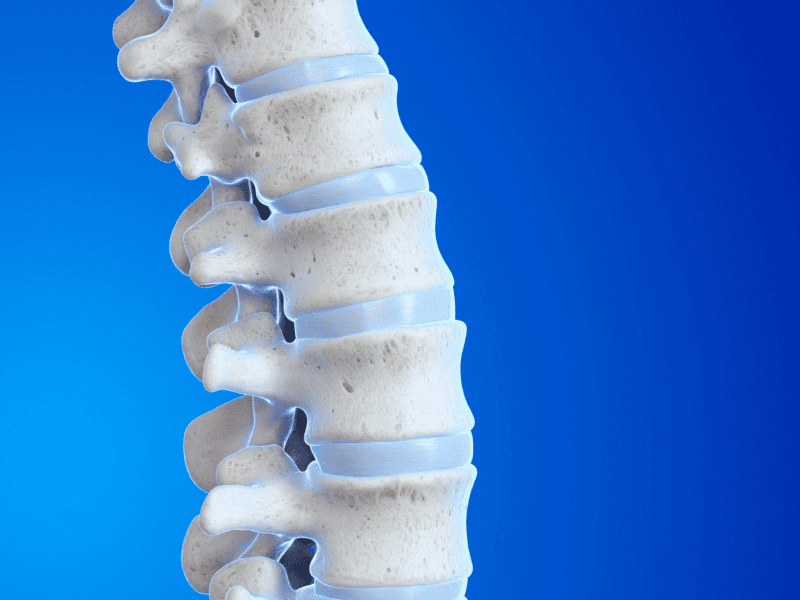
Facet joint pain is a common source of chronic neck and back pain, particularly in people experiencing age-related changes in the spine. These small joints help stabilize the spine and allow it to bend, twist, and move. When facet joints become irritated, inflamed, or affected by arthritis, they can contribute to persistent discomfort and reduced mobility.
Understanding facet joint pain can help patients recognize potential symptoms, learn how the condition is diagnosed, and explore treatment options that may improve spinal function and quality of life. Although facet joint degeneration is common, not everyone with these changes experiences pain. An accurate diagnosis is important for determining whether the facet joints are responsible for symptoms and identifying the most appropriate treatment approach.
What Are Facet Joints in the Spine?
Facet joints are small paired joints located along the back of the spine. Each vertebra has two pairs of facet joints that connect it to the vertebra above and below. These joints are also called zygapophyseal joints.
Facet joints serve several important functions:
- Provide spinal stability: They help keep the vertebrae properly aligned during movement.
- Control spinal motion: They guide how the spine bends, extends, and rotates.
- Limit excessive movement: They help prevent the spine from twisting or bending beyond its normal range.
- Distribute mechanical stress: They share some of the forces placed on the spine during everyday activities.
Each facet joint contains cartilage and a surrounding capsule that produces lubricating fluid. These structures allow the joint surfaces to move smoothly against one another. Because facet joints contain sensory nerve endings, irritation or inflammation can produce localized pain.
What Causes Facet Joint Pain?
Facet joint pain develops when one or more of these joints become irritated, inflamed, or damaged. The most common underlying cause is osteoarthritis, also known as degenerative joint disease.
As the spine ages, the cartilage covering the facet joints can gradually wear down. This may lead to increased friction between the joint surfaces, inflammation, bone spur formation, and changes in joint movement.
Other factors that may contribute to facet joint pain include:
- Age-related degeneration: Normal wear and tear can gradually affect the cartilage and surrounding structures.
- Spinal arthritis: Osteoarthritis can cause inflammation, stiffness, and changes in the facet joints.
- Spinal disc degeneration: When intervertebral discs lose height, additional stress may be transferred to the facet joints.
- Previous spinal injuries: Trauma or repetitive strain can damage or irritate the joints.
- Repetitive movements: Frequent bending, twisting, or backward extension may increase mechanical stress.
- Poor posture: Prolonged positions that place excessive pressure on the spine may contribute to discomfort.
Facet joint pain can occur in the cervical spine (neck), thoracic spine (mid-back), or lumbar spine (lower back). However, it is most commonly associated with the cervical and lumbar regions.
What Are the Common Symptoms of Facet Joint Pain?
Facet joint pain symptoms depend on which part of the spine is affected. In many cases, discomfort is concentrated near the irritated joint rather than spreading throughout the body.
Common symptoms include:
- Localized neck or back pain: Discomfort is often felt on one or both sides of the spine.
- Pain with backward bending: Extending the spine may increase pressure on the facet joints.
- Pain when twisting: Rotational movements can aggravate irritated joints.
- Morning stiffness: The affected area may feel stiff after sleeping or remaining inactive.
- Reduced range of motion: Joint irritation can make bending, turning, or extending the spine uncomfortable.
- Pain after prolonged standing: Remaining upright for extended periods may increase lower back discomfort.
Cervical facet joint pain may cause discomfort in the neck, shoulders, or upper back. Lumbar facet joint pain may extend into the buttocks or upper thighs.
Unlike some conditions involving nerve compression, facet joint pain does not typically cause numbness, tingling, or muscle weakness. When these symptoms occur, another spinal condition or an additional source of nerve irritation may need to be investigated.
How Is Facet Joint Pain Diagnosed?
Diagnosing facet joint pain can be challenging because its symptoms often resemble other spinal conditions, including degenerative disc disease, muscle strain, and spinal stenosis.
A physician typically begins with a medical history and physical examination. Patients may be asked about the location of their pain, activities that make symptoms worse, and whether discomfort changes with certain movements.
The evaluation may include:
- Physical examination: The physician assesses spinal mobility, tenderness, posture, and movements that reproduce discomfort.
- X-rays: These images can reveal arthritis, bone spurs, and other degenerative changes affecting the facet joints.
- MRI scans: MRI can help identify soft tissue abnormalities, disc degeneration, inflammation, and other potential sources of pain.
- CT scans: These provide detailed images of the bones and may help evaluate facet joint degeneration.
Imaging alone cannot confirm that a facet joint is causing pain. Some people have significant degenerative changes without experiencing symptoms.
A diagnostic medial branch block may be recommended when facet joint pain is suspected. This procedure involves injecting a small amount of local anesthetic near the medial branch nerves that carry pain signals from the facet joints. Temporary pain relief following the injection can help determine whether the targeted joints are contributing to symptoms.
What Are the Treatment Options for Facet Joint Pain?
Facet joint pain treatment depends on symptom severity, the affected spinal region, and the underlying cause. Many patients begin with conservative treatments designed to reduce discomfort and improve mobility.
Common treatment options include:
- Physical therapy: Targeted exercises strengthen the muscles supporting the spine, improve flexibility, and promote better movement patterns.
- Activity modification: Temporarily reducing activities that aggravate symptoms may help decrease joint irritation.
- Anti-inflammatory medications: Certain medications may help manage inflammation and discomfort when medically appropriate.
- Heat and ice therapy: Applying heat or cold may provide temporary relief from stiffness and localized pain.
- Posture and movement training: Improving body mechanics can reduce unnecessary stress on the facet joints.
When conservative treatments do not provide sufficient relief, interventional pain management procedures may be considered.
Can Facet Joint Injections Relieve Spinal Pain?
Facet joint injections deliver a combination of local anesthetic and corticosteroid medication directly into or around an affected joint. The goal is to reduce inflammation and provide temporary pain relief.
These injections may also help physicians evaluate whether a particular facet joint is contributing to symptoms. However, the duration of relief varies, and injections are not appropriate for every patient.
What Is Radiofrequency Ablation for Facet Joint Pain?
Radiofrequency ablation (RFA) is a minimally invasive procedure that uses controlled heat to interrupt pain signals traveling through the medial branch nerves.
Before RFA is considered, patients generally undergo diagnostic medial branch blocks to determine whether these nerves are responsible for their pain.
During the procedure, a physician uses imaging guidance to position a specialized needle near the targeted nerves. Radiofrequency energy creates a small lesion that disrupts the transmission of pain signals.
Pain relief may last several months or longer, although results vary. Because the nerves can regenerate over time, symptoms may eventually return.
When Should Someone Seek Treatment for Facet Joint Pain?
Persistent neck or back pain that interferes with daily activities warrants a medical evaluation. Patients should consider seeking care when discomfort lasts several weeks, repeatedly returns, or limits their ability to work, exercise, sleep, or participate in normal activities.
Sudden severe back pain, new leg or arm weakness, or progressive neurological symptoms require prompt medical attention. New loss of bladder or bowel control or numbness around the groin or saddle area requires emergency evaluation.
Early assessment can help identify the source of spinal pain and prevent patients from relying on treatments that may not address the underlying problem.
Can Facet Joint Pain Be Prevented?
Age-related facet joint degeneration cannot always be prevented. However, maintaining spinal strength and healthy movement habits may help reduce unnecessary stress on the joints.
Helpful strategies include:
- Participating in regular low-impact physical activity.
- Strengthening the abdominal, back, and core muscles.
- Maintaining a healthy body weight.
- Practicing proper lifting techniques.
- Avoiding prolonged periods in one position.
- Addressing recurring spinal discomfort before it significantly limits mobility.
These habits support overall spinal health but cannot guarantee that facet joint arthritis or pain will not develop.
What Is the Outlook for People With Facet Joint Pain?
The outlook for people with facet joint pain depends on the severity of joint degeneration, overall spinal health, and response to treatment. Many patients experience meaningful improvement with physical therapy, activity modifications, medications, or minimally invasive procedures.
Although facet joint arthritis may be a chronic condition, ongoing discomfort does not have to be an inevitable part of daily life. Identifying the source of pain allows physicians to develop treatment plans that address individual symptoms and functional goals.
Patients experiencing persistent neck or back pain should consult a qualified spine or pain management specialist to determine whether facet joint dysfunction may be contributing to their symptoms. With an accurate diagnosis and appropriate care, many people can improve mobility, reduce discomfort, and return to more comfortable daily activities.
[gravityform id=1 title=false description=false]
 What Is Radiofrequency Ablation and How Can It Help Chronic Pain?