
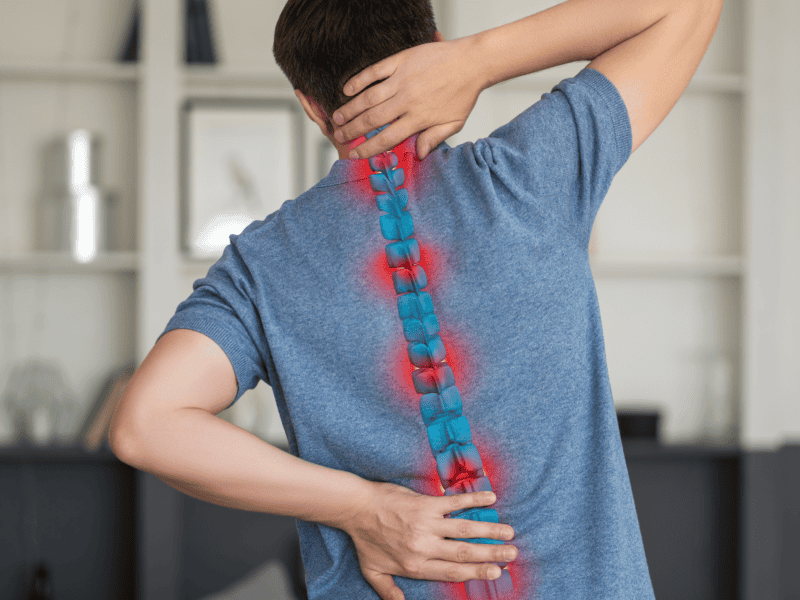
Spinal stenosis is a common spine condition that can cause persistent back pain, leg pain, numbness, tingling, and difficulty walking. Although spinal stenosis often develops gradually with age, its symptoms can significantly interfere with everyday activities.
Understanding how spinal stenosis affects the spinal nerves can help patients recognize symptoms and learn when evaluation may be appropriate.
What Is Spinal Stenosis?
Spinal stenosis is a condition in which the spaces within the spine become narrower, potentially putting pressure on the spinal cord or nearby spinal nerves. What is spinal stenosis? It is most often related to age-related changes in the spine, including arthritis, thickened ligaments, bone spurs, and changes to the spinal discs.
Spinal stenosis can occur anywhere along the spine, but lumbar spinal stenosis in the lower back is particularly likely to cause symptoms in the buttocks and legs. Cervical spinal stenosis affects the neck and can produce symptoms involving the arms, hands, legs, or balance.
Why Can Spinal Stenosis Cause Back Pain?
Why can spinal stenosis cause back pain? Narrowing of the spinal canal can occur alongside arthritis and other degenerative changes that irritate structures within the lower back. The resulting inflammation, joint changes, and mechanical stress can contribute to localized back pain and stiffness.
Back pain associated with spinal stenosis may be worse after standing or walking for extended periods. Some people experience relief when sitting or bending forward because these positions can temporarily create more space around the affected nerves.
Why Does Spinal Stenosis Cause Leg Pain?
Why does spinal stenosis cause leg pain? When the openings surrounding the spinal nerves become narrowed, the nerves that travel from the lower back into the legs can become compressed or irritated. This can cause pain that travels from the lower back or buttocks into one or both legs.
Leg pain caused by spinal stenosis may feel sharp, aching, burning, or cramping. Some patients also experience numbness, tingling, weakness, or a sensation of heaviness in the legs.
What Is Neurogenic Claudication?
What is neurogenic claudication? Neurogenic claudication is a characteristic symptom of lumbar spinal stenosis in which standing or walking causes pain, numbness, tingling, or weakness in the legs.
A person with neurogenic claudication may be able to walk only a certain distance before symptoms develop. Sitting down or leaning forward, such as when resting on a shopping cart, may reduce symptoms.
This pattern can help distinguish spinal stenosis from some other causes of leg pain.
What Causes Spinal Stenosis?
What causes spinal stenosis? Spinal stenosis is commonly caused by gradual changes that occur as the spine ages. Osteoarthritis can cause bone spurs to develop, while spinal discs may lose height and contribute to narrowing around the nerves. Ligaments can also become thicker over time.
Other factors can include a naturally narrow spinal canal, previous spinal injury or surgery, and certain structural conditions. Because several changes may contribute to narrowing at the same time, identifying the underlying cause is an important part of diagnosis.
How Is Spinal Stenosis Diagnosed?
How is spinal stenosis diagnosed? Diagnosis typically begins with a medical history and physical examination. A physician may ask when symptoms occur, whether walking or standing makes them worse, and whether sitting or bending forward provides relief.
Imaging may also be used to evaluate the spine. X-rays can identify certain structural and degenerative changes, while magnetic resonance imaging (MRI) can provide detailed images of the spinal canal, discs, nerves, and surrounding soft tissues.
The goal is to determine whether spinal narrowing corresponds with the patient’s symptoms rather than relying on imaging findings alone.
What Treatments Can Help Spinal Stenosis?
What treatments can help spinal stenosis? Treatment depends on the severity of symptoms, the underlying cause, and how much the condition affects daily activities. Conservative treatment may include physical therapy, activity modification, medications when appropriate, and targeted injections in selected patients.
Physical therapy may focus on improving strength, flexibility, posture, and mobility. Some patients may benefit from exercises designed to improve tolerance for walking and everyday activities.
For persistent symptoms, interventional pain treatments may be considered. In more severe cases, particularly when significant nerve compression causes progressive weakness or other concerning symptoms, surgical treatment may be evaluated.
When Should Someone With Spinal Stenosis See a Doctor?
When should someone with spinal stenosis see a doctor? Medical evaluation is appropriate when back or leg pain persists, repeatedly limits walking or standing, or is accompanied by numbness, tingling, or weakness.
New or worsening neurological symptoms deserve prompt attention. Severe or rapidly progressing weakness, significant changes in bladder or bowel control, or numbness around the groin or inner thighs can indicate a more serious problem requiring urgent medical evaluation.
Can Spinal Stenosis Symptoms Be Managed?
Can spinal stenosis symptoms be managed? In many cases, spinal stenosis symptoms can be managed with an individualized treatment plan. The condition itself may not necessarily be reversed, but treatment can address pain, nerve irritation, mobility limitations, and other symptoms.
Understanding the connection between spinal narrowing and nerve compression is an important first step. For patients experiencing persistent back pain, leg pain, numbness, or difficulty walking, an appropriate evaluation can help determine whether spinal stenosis or another spine condition is responsible.
This article is intended for educational purposes only and should not replace an evaluation by a qualified healthcare professional.
[gravityform id=1 title=false description=false]
 How Chronic Pain Affects Your Daily Life