
Back pain is one of the most common health complaints, especially as we age. Two conditions that often go hand-in-hand are spondylosis and spinal stenosis. While both can cause stiffness, discomfort, and mobility issues, advancements in modern medicine mean that surgery isn’t always the only option. Minimally invasive procedures are increasingly offering patients long-lasting relief with less downtime.
Understanding Spondylosis and Spinal Stenosis
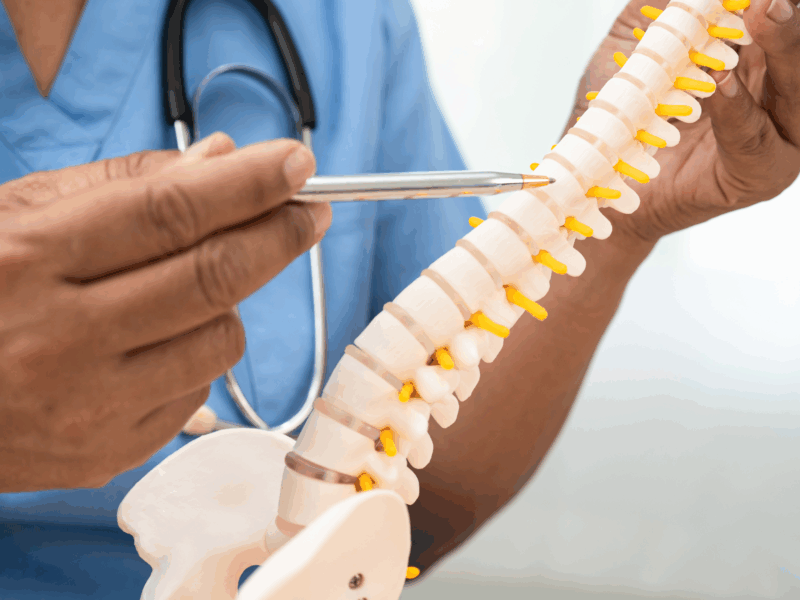
- Spondylosis is a general term describing age-related wear and tear of the spine. It includes arthritis of the spinal joints, disc degeneration, and bone spurs. Many people over 50 have some degree of spondylosis, even if they don’t have symptoms.
- Spinal stenosis occurs when the spaces within the spinal canal narrow, often due to spondylosis, disc bulging, or ligament thickening. This narrowing can put pressure on the spinal cord or nerves, leading to pain, numbness, or weakness in the back, legs, or arms.
These conditions often overlap, with spondylosis contributing to the development of spinal stenosis.
Common Symptoms
- Persistent back or neck pain
- Stiffness and reduced range of motion
- Sciatica or radiating leg pain
- Tingling, weakness, or numbness in the extremities
- Difficulty standing or walking for long periods
If these symptoms affect your daily life, it may be time to explore more than just physical therapy or medications.
When Conservative Care Isn’t Enough
For many patients, first-line treatment includes:
- Physical therapy
- Heat, ice, and activity modification
- Anti-inflammatory medications
- Epidural steroid injections
While these options may provide temporary relief, they don’t always address the underlying issues. When pain persists despite conservative treatment, minimally invasive procedures may be the next step.
Minimally Invasive Procedures That Can Help
- Epidural Steroid Injections
- Reduce inflammation around compressed nerves
- Provide temporary but significant pain relief
- Medial Branch Blocks & Radiofrequency Ablation (RFA)
- Target the small nerves that carry pain signals from arthritic joints
- Can provide long-lasting relief from spondylosis-related pain
- MILD® Procedure (Minimally Invasive Lumbar Decompression)
- Removes small pieces of thickened ligament tissue pressing on nerves
- Helps relieve spinal stenosis symptoms without open surgery
- Intracept® Procedure
- Targets basivertebral nerve within the vertebrae to address chronic low back pain caused by degenerative changes
- Minimally Invasive Lumbar Fusion or Decompression
- Used in select cases where instability or severe narrowing requires stabilization or decompression
Benefits of Minimally Invasive Options
- Smaller incisions
- Less muscle and tissue damage
- Reduced risk of infection
- Shorter recovery times compared to open surgery
- Many procedures can be done on an outpatient basis
Who Is a Candidate?
Ideal candidates are patients who:
- Have persistent symptoms despite conservative treatment
- Show imaging evidence of spondylosis or spinal stenosis
- Want to avoid or delay major surgery
- Have no severe spinal instability that requires open surgery
The Bottom Line
Spondylosis and spinal stenosis don’t always mean you’re destined for major surgery. Minimally invasive procedures offer real hope for patients struggling with chronic pain, stiffness, and mobility issues. If conservative treatments haven’t worked for you, it may be time to ask your spine specialist whether a minimally invasive option is the next step toward lasting relief.
[gravityform id=1 title=false description=false]
 Staying Active with Chronic Pain: Low-Impact Exercises